Greatest Meals For Your Enamel

Greatest Meals For Your Enamel

Tooth enamel represents the hardest mineral tissue in the human anatomy, composed predominantly of carbonated hydroxyapatite crystals arranged in tightly packed prisms. Yet despite its remarkable structural density, this outer armor faces relentless chemical and mechanical challenges every single day. Once demineralization outpaces natural repair, lost enamel cannot regenerate biologically. Strategic daily nutrition provides one of the most reliable defenses against acid erosion, carious lesions, and extrinsic discoloration. Designing the greatest meals for your enamel requires more than avoiding obvious sweets; it demands an intentional orchestration of minerals, salivary stimulants, buffering compounds, and whole-food textures that preserve tooth structure across every decade of life.

The Biochemical Reality of Enamel Preservation

Every bite and sip initiates a dynamic equilibrium at the tooth-saliva interface. Oral biofilm bacteria metabolize fermentable carbohydrates and excrete organic acids, depressing plaque pH below the critical threshold where calcium and phosphate ions begin dissolving out of hydroxyapatite. Left unchecked, repeated acid excursions create subsurface porosity that weakens the crown and leaves underlying dentin vulnerable to thermal stimuli.
Saliva serves as the primary physiological buffer against this demineralization cascade. Bicarbonate, phosphate, and statherin proteins within resting and stimulated saliva neutralize acidity, clear food debris, and supersaturate the oral fluid environment with the exact ions required for remineralization. Meals that foster copious salivary flow and deliver bioavailable minerals tip the balance decisively toward structural preservation.
Timing matters as much as ingredient selection. Grazing continuously on acidic or sugary items keeps oral pH depressed for hours, depriving enamel of recovery windows. Structured meals spaced thoughtfully across the day allow salivary buffering systems to restore neutrality between eating episodes.

Core Nutritional Pillars for Enamel Strength

Crafting the greatest meals for your enamel centers on specific biochemical mechanisms rather than fleeting dietary fads. Each pillar addresses a distinct vulnerability in oral hard tissues.

Bioavailable Minerals and Remineralization Cofactors

Calcium and phosphate form the crystalline backbone of enamel, while trace minerals and fat-soluble vitamins govern how efficiently the body utilizes them. Dairy matrices, leafy greens, legumes, and certain seeds supply calcium alongside casein phosphopeptides or fiber structures that support oral homeostasis. Fat-soluble vitamins—particularly vitamin D and vitamin K2—participate in systemic calcium metabolism and bone and mineral regulation, complementing local remineralization processes.

Mastication and Salivary Stimulation

Mechanical chewing force drives a sharp surge in salivary secretion rate. Crisp, fibrous vegetables and firm whole foods require deliberate mastication, increasing fluid volume and buffering capacity right when food particles are present in the mouth. Higher saliva flow accelerates acid clearance from occlusal fissures and interproximal contours.

Low Acidity and Minimal Chromogenic Load

Erosive acids soften enamel surfaces, making them far more susceptible to abrasion from brushing or hard textures. Meanwhile, intense dietary chromogens and tannins can adhere to pellicle proteins and gradually darken smiles. Meals built around neutral-to-alkaline whole ingredients protect both mechanical hardness and aesthetic clarity.

Signature Meals Designed for Enamel Resilience

Translating nutritional science into daily eating becomes effortless when meals are structured around balanced macronutrients and enamel-friendly profiles. The following options illustrate how everyday plates can prioritize oral hard-tissue protection.

1. Crisp Crudités, Chickpea, and Sesame Tahini Bowl

A vibrant bowl combining raw celery batons, julienned carrots, English cucumber slices, cooked chickpeas, and a dressing whisked from sesame tahini, olive oil, and a light touch of mild herb seasoning offers both crunch and mineral density. Chewing crisp vegetables stimulates vigorous salivation, while chickpeas and sesame tahini contribute plant-derived calcium, phosphorus, and magnesium. Unlike sticky dressings heavy in added sugars or concentrated citrus acids, a tahini-olive oil emulsion coats ingredients smoothly without prolonged acid exposure.

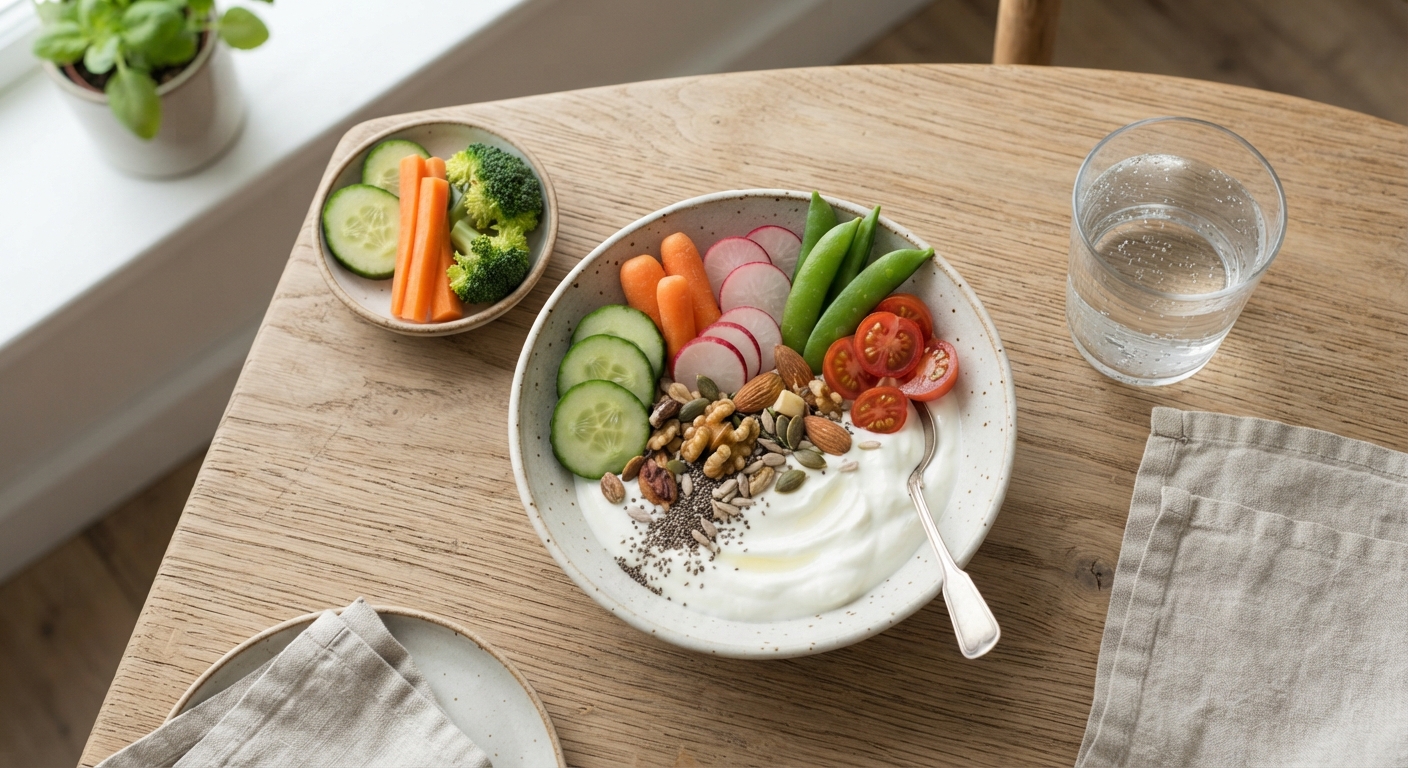
2. Unsweetened Greek Yogurt Parfait With Slivered Almonds and Chia Seeds

Plain, unsweetened Greek or skyr-style yogurt layered with slivered almonds, chia seeds, and mild low-acid fruit such as sliced pear creates a satisfying breakfast or afternoon meal. Fermented dairy provides bioavailable calcium and casein proteins that help stabilize calcium-phosphate levels near the tooth surface. Slivered almonds deliver crunch and micronutrients without the tooth-clinging stickiness of dried fruit or caramel toppings, while chia seeds add soluble fiber and texture.

3. Pan-Seared Wild Salmon or Cod With Steamed Broccoli and Quinoa

A plated meal of wild salmon or mild white cod alongside steamed broccoli florets and cooked quinoa balances lean protein, complex carbohydrates, and protective micronutrients. Fatty fish supplies omega-3 fatty acids and dietary vitamin D, while white fish offers clean, low-fat protein with minimal staining potential. Steamed broccoli contributes calcium and fibrous bulk, and quinoa provides steady energy without refined sugars that feed acidogenic plaque bacteria.

4. Herb-Roasted Chicken Thighs, Sautéed Swiss Chard, and Brown Rice

Roasted boneless chicken thighs seasoned with rosemary, thyme, and garlic paired with sautéed Swiss chard and steamed brown rice form a hearty, restorative dinner. Swiss chard and other leafy greens supply minerals and dietary nitrates that support broader vascular and oral health. Pairing savory poultry and whole grains creates a complete, filling meal that reduces the urge for sugary post-dinner snacks.

5. Baked Egg, White Cheddar, and Mushroom Frittata With Spinach

An oven-baked frittata crafted with pasture-raised eggs, folded baby spinach, sautéed cremini mushrooms, and grated mild white cheddar works seamlessly for brunch, lunch, or a quick evening meal. Eggs deliver protein and fat-soluble nutrients, white cheddar contributes calcium and phosphorus, and mushrooms add umami depth without heavy acidity or dark sauces. Serving the frittata alongside a crisp side salad enhances mastication and meal satisfaction.

6. Lentil, Barley, and Roasted Root Vegetable Stew

A slow-simmered stew made with green or brown lentils, pearled barley, diced parsnips, turnips, and mild vegetable or bone broth offers warmth and sustained satiety. Barley and lentils supply fermentable prebiotic fibers and minerals, while parsnips and turnips provide gentle sweetness without refined sugars. Keeping tomato paste or harsh vinegar additions minimal preserves a gentler acid profile for enamel.

7. Edamame, Avocado, and Brown Rice Poke-Style Bowl

A chilled or room-temperature bowl featuring steamed edamame, sliced ripe avocado, shredded cabbage, and warm brown rice dressed with a light sesame-ginger oil blend provides varied textures and rich nutrition. Edamame contributes plant protein and isoflavones alongside minerals, cabbage adds crispness, and avocado supplies smooth monounsaturated fats that round out the meal.

Strategic Mealtime Habits That Amplify Protection

Even the greatest meals for your enamel perform best when paired with deliberate eating mechanics. Small behavioral refinements protect teeth before, during, and after every course.
  • Pair Acidic Ingredients With Full Meals: When a meal includes mildly acidic components such as vinaigrette, fermented foods, or fruit, eating them alongside proteins, fats, and fibrous vegetables helps buffer overall acidity.

  • Keep Water at the Table: Sipping plain water throughout a meal rinses residual food particles, dilutes organic acids, and supports steady hydration without adding sugars or pigments.

  • Delay Brushing After Acidic or Sweet Meals: Enamel softened transiently by dietary acids is vulnerable to mechanical abrasion; waiting roughly thirty minutes allows saliva to remineralize the surface before brushing.

  • Avoid Continuous Grazing: Consolidating snacks and beverages into defined eating windows gives salivary buffers time to reset oral pH between exposures.

  • Choose Xylitol Gum After Meals When Needed: Chewing sugar-free gum sweetened with xylitol after eating—when brushing is impractical—stimulates protective saliva flow while offering a non-fermentable sweetener alternative.

Foods and Eating Patterns to Approach With Caution

Understanding what undermines enamel makes meal planning far sharper. Certain culinary staples and habits repeatedly challenge tooth structure over time.
  • Frequent Sipping of Acidic or Sugary Drinks: Sodas, sweetened teas, energy drinks, fruit juices, and even constant sipping of sparkling water or citrus-infused water maintain lower pH levels when consumed slowly over hours.

  • Sticky, Retentive Sweets: Dried fruits, caramels, gummies, and chewy baked goods cling to pits, fissures, and interproximal contacts, prolonging acid production by plaque bacteria.

  • High-Acidity Condiments in Excess: Heavy vinegar marinades, concentrated citrus reductions, and sour candies can accelerate erosive tooth wear if eaten frequently without buffering foods.

  • Hard, Brittle Objects That Cause Micro-Fractures: Chewing ice cubes, hard candies, or unpopped kernels places extreme point loads on cusps and restorations, risking microscopic crazing or outright fractures.

  • Late-Night Sugary or Acidic Eating: Consuming fermentable carbohydrates or acids right before sleep is particularly risky because salivary flow naturally declines overnight.


Adapting Enamel-Focused Meals to Diverse Lifestyles

No single menu fits every schedule, budget, or cultural tradition. The greatest meals for your enamel adapt readily across busy workdays, family dinners, and plant-forward or omnivorous kitchens.
For individuals following plant-forward diets, combining legumes, tofu or tempeh, tahini, almonds, chia seeds, and calcium-set or fortified foods helps meet mineral needs while maintaining rich culinary variety. Those who prefer omnivorous meals can rotate fish, poultry, eggs, and dairy alongside abundant vegetables and whole grains.
Consistency across ordinary weeks outweighs perfection at a single meal. Building a rotation of five to seven reliable, enamel-friendly meals ensures that nourishing your body and safeguarding your teeth happen simultaneously—day after day, meal after meal.